
 By
By 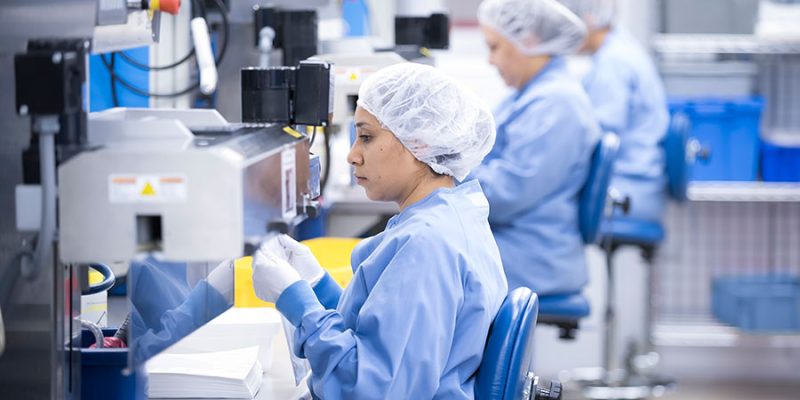
Medical contract manufacturing has emerged as the backbone of modern healthcare delivery, transforming how life-saving devices reach patients across the globe. This sophisticated industry operates behind the scenes, yet its influence touches every hospital ward, surgical theatre, and medical clinic where precision instruments make the difference between life and death.
The Foundation of Modern Medical Device Production
The landscape of healthcare manufacturing has shifted dramatically over recent decades. Where once large pharmaceutical corporations maintained vast in-house production facilities, today’s reality reflects a more efficient model. Medical contract manufacturing allows healthcare innovators to focus their energies on research and development whilst experienced specialists handle the complexities of production. This division of labour mirrors the industrial revolutions of centuries past, where specialisation brought both quality improvements and economic advantage.
Singapore has positioned itself as a premier hub for medical contract manufacturing in Asia, with the sector contributing significantly to the nation’s economy. The city-state’s medical technology industry produces approximately 10 percent of the global market for medical devices, demonstrating the remarkable concentration of expertise within its borders.
Quality Standards and Regulatory Compliance
The manufacture of medical devices demands an unwavering commitment to quality that exceeds virtually every other industry. Medical contract manufacturing facilities operate under rigorous international standards, including ISO 13485 certification, which governs quality management systems specifically for medical devices. These standards ensure that every component, from the simplest surgical blade to complex diagnostic equipment, meets exacting specifications.
Consider the journey of a single sterile syringe. Its production involves:
- Precision moulding of medical-grade plastics under cleanroom conditions
- Assembly of multiple components with tolerances measured in micrometres
- Sterilisation processes validated to eliminate all biological contamination
- Packaging that maintains sterility throughout global distribution chains
- Documentation that traces every material back to its source
This meticulous attention to detail characterises medical contract manufacturing at every level, creating products worthy of the trust patients and practitioners place in them.
Technological Capabilities and Innovation
Modern medical contract manufacturing facilities resemble a fusion of scientific laboratory and advanced factory floor. Cleanrooms maintained at specific atmospheric pressures prevent contamination. Computer-controlled machinery produces components with consistency impossible for human hands alone. Quality control systems employ artificial intelligence to detect defects invisible to the naked eye.
The scope of capabilities extends across diverse medical specialties. Cardiovascular devices require biocompatible materials that can withstand the corrosive environment of human blood. Orthopaedic implants demand metals and ceramics that integrate with living bone. Diagnostic equipment needs electronics sealed against bodily fluids whilst maintaining sensitivity to minute biological signals.
Singapore’s Strategic Advantages
Singapore’s success in medical contract manufacturing stems from deliberate policy choices made over generations. The government invested heavily in education, producing engineers and technicians skilled in precision manufacturing. Regulatory authorities developed approval processes that balance rigorous safety requirements with reasonable timelines. Infrastructure investments created logistics networks enabling rapid global distribution.
“Singapore has built a reputation for reliability and quality in medical device manufacturing,” industry observers note, “with over 50 major medical technology companies choosing to base their operations here.” This concentration creates a network effect, where suppliers, specialists, and knowledge accumulate, raising standards across the entire sector.
Risk Management and Supply Chain Security
The COVID-19 pandemic exposed vulnerabilities in global medical supply chains, making medical contract manufacturing partnerships more critical than ever. Diversifying production across multiple facilities and regions provides resilience against disruptions. Contract manufacturers maintain strategic stockpiles of essential components and raw materials. Sophisticated logistics planning ensures continuity even during crisis periods.
Healthcare providers increasingly recognise that selecting a medical contract manufacturing partner involves assessing not merely production capabilities but also risk management strategies. Can the facility withstand natural disasters? Does it maintain alternative suppliers for critical materials? What contingency plans address potential disruptions?
Environmental and Ethical Considerations
Modern medical contract manufacturing increasingly addresses sustainability concerns. Facilities implement waste reduction programmes, recycle materials where possible, and design products for eventual safe disposal. Energy-efficient manufacturing processes reduce carbon footprints. Ethical sourcing ensures materials come from suppliers meeting labour and environmental standards.
These considerations reflect growing recognition that healthcare’s mission to protect human health extends to protecting the environmental conditions upon which all health depends.
The Future Landscape
Emerging technologies promise to reshape medical contract manufacturing in coming years. Three-dimensional printing enables customised implants tailored to individual patient anatomy. Nanotechnology creates devices that operate at cellular scales. Smart materials respond to biological conditions, adjusting their properties as healing progresses.
Singapore continues investing in these advanced capabilities, ensuring its medical contract manufacturing sector remains at the industry’s forefront. Research partnerships between manufacturers, universities, and hospitals accelerate innovation whilst maintaining the stringent quality standards the field demands.
Conclusion
The partnership between healthcare innovators and manufacturing specialists has created a system capable of delivering increasingly sophisticated medical devices to patients worldwide. From the smallest suture to complex robotic surgical systems, these products emerge from facilities where precision meets purpose. As medical science advances and global healthcare.
Comments