
 By
By 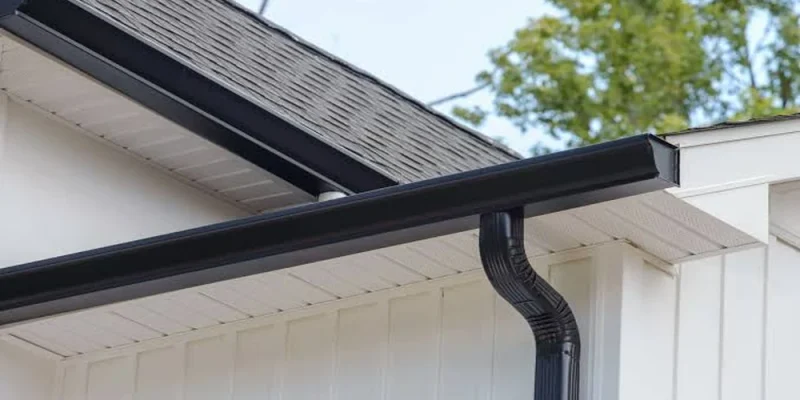
Stand under the eaves of most Central Texas homes after a spring storm and you can usually find the weak points without a ladder. Water drips from a line of joints along the edge, a corner sends a sheet of runoff down the siding, and a muddy trench forms where the slab meets the soil. Most of those drips trace back to one decision made when the gutters went up. Either the trough was hung in short pieces, or it was formed as one continuous run.
Homeowners around Temple, Belton and Killeen who start comparing options often come across AquaWorks Rain Gutters. The veteran-owned crew works out of Paramount Parkway in Temple. It rolls 5, 6 and 7 inch aluminum troughs from a machine parked in the driveway and cuts each length to the eave it will hang on. Its work also reaches Harker Heights, Waco, Georgetown and Austin, and covers leaf guards, custom downspouts and cleaning. The bigger question for anyone weighing a new system is how the two styles behave once the sky opens up, so it helps to compare them piece by piece.
Two Ways to Hang the Same Trough
Sectional gutters come in fixed lengths, usually 10 or 20 feet, in vinyl, aluminum or steel. Installers, or homeowners with a free weekend and a ladder, snap or rivet the pieces together with connectors. Sealant is what keeps each joint watertight. A typical 40 foot eave might have three or four of these splices before you count the corners.
Seamless gutters start as a coil of painted aluminum, and sometimes steel or copper. A roll former shapes the coil into a K style or half round profile on site. The installer then feeds out one unbroken piece for each straight run. The only joints left are the mitered corners, the end caps and the openings where downspouts drop.
That difference sounds cosmetic. In practice it decides where water escapes.
Where the Leaks Actually Start
Every splice in a sectional system is a small bet on caulk. Gutter sealant holds up for a few seasons, but it sits in one of the harshest spots on the house. It bakes in direct sun and then gets flooded in a sudden storm. Central Texas swings from triple digit summer afternoons to the occasional hard freeze, and every swing makes the metal or vinyl grow and shrink a little. Over time the sealant loses its grip.
The failures tend to show up in a predictable order.
- Joint seams open first and leave a thin drip line that streaks fascia boards and stains brick.
- Vinyl pieces warp and sag in the heat, which flattens the slope and lets water pool in the middle of a run.
- Pooled water holds leaf litter and pollen, and that feeds rot in the fascia behind the gutter.
- Corners take the hardest hit, because water changes direction there and pushes against the miter.
Seamless runs still have corners and end caps to watch. But cutting the joint count from a dozen down to three or four shrinks the number of places that can fail. That is the main reason installers in storm prone regions steer people toward continuous aluminum.
Why Rain Intensity Changes the Math
How much rain a gutter sees in an hour matters more than the yearly total. Central Texas storms tend to unload in bursts, with an inch or more falling in a short window, and the official benchmarks have moved upward. When NOAA updated its precipitation frequency figures for Texas, the 24 hour rainfall amount for a 100 year storm around Austin rose by as much as three inches. You can check the estimates for your own location through the NOAA Precipitation Frequency Data Server.
Heavy bursts expose undersized systems fast. A 5 inch trough can handle a modest ranch roof. A long, steep roof plane can push more water into one gutter than it can carry, though, and the overflow spills over the front lip. That is why seamless installers often size up to 6 inch troughs paired with larger 3 by 4 inch downspouts on Texas homes. Sectional kits at big box stores are mostly 5 inch, and larger sectional profiles are harder to find.
The Clay Under the Slab
This is where a gutter choice turns into a foundation conversation. Much of the area from Waco down through Temple sits on Blackland Prairie clay, including Houston Black, the official state soil of Texas. These clays swell when wet and shrink as they dry, and they react badly to uneven moisture.
A sectional gutter dripping at one splice all season keeps one patch of soil next to the slab soaked while the rest of the perimeter dries out. That uneven wetting is a common contributor to slab movement, cracked drywall corners and doors that suddenly stick. A continuous run that carries water to a downspout, with the downspout discharging several feet from the house, keeps the soil moisture around the foundation more even.
Heat, Hail and Expansion
Aluminum seamless gutters are not immune to Texas weather. A long aluminum run can grow by about half an inch between a cold morning and a hot afternoon. Very long eaves sometimes get an expansion joint in the middle, or hangers that let the trough slide slightly.
Hail can dent aluminum, and thicker .032 gauge coil holds up better than thinner .027 stock. Steel resists dents but can rust where the coating chips. Copper costs far more and is usually reserved for historic or high end homes. Vinyl sectional gutters handle hail poorly once the heat has made them brittle, and a lot of mid storm cracking comes from exactly that.
Cost, Repair and the Do It Yourself Factor
Sectional systems do win on a few points. The material costs less per foot, and a handy homeowner can install one without special equipment. If a branch crushes one 10 foot piece, you can swap out just that piece. For a detached shed, a small workshop or a short porch run, those advantages are real.
Seamless runs cost more up front and need a crew with a roll former, so they are not a DIY job. Replacing a damaged section usually means forming a new run for that side of the house, although minor dents can often be patched. Hidden hangers screwed into the fascia roughly every two feet give seamless systems a stronger hold than the spikes and clips common on older sectional jobs. That matters when a gutter is full of water and debris.
Appearance is part of the trade as well. Baked enamel coil comes in dozens of colors, so a seamless run can closely match the trim, and the unbroken line looks cleaner from the street.
Choosing for Your Own Roofline
The better choice depends less on preference than on the house itself. Take a long single story ranch on expansive clay, with several large roof planes draining toward the same corners. On a home like that, the extra cost of continuous aluminum tends to pay back through fewer drips, fewer fascia repairs and steadier soil moisture along the slab. A small outbuilding, or a rental you plan to sell soon, may get along fine with sectional pieces, as long as someone checks the seams every spring and fall.
Whichever system goes up, the details around it decide most of the outcome. The trough needs a slope of roughly a quarter inch for every ten feet. Downspouts should be sized for the roof area they serve, extensions should carry water well past the foundation, and live oak leaves and pecan debris need regular clearing. Those details do as much for the house as the trough itself. Get them right and either style will give you years of service. Get them wrong and even the cleanest seamless line will spill over the edge during the next Texas downpour.





Comments